Storytelling is beautiful. But without proof, it's just noise.
We've all been sold a story that didn't deliver. Here's why proof isn't the enemy of great branding it's what makes people finally believe you.
Let me be honest with you for a second.
We live in the golden age of brand storytelling. Every brand has a founding myth. Every founder has a personal struggle turned triumph. Every product was born from a problem the creator experienced themselves usually at 3am, usually in a garage, usually with nothing but passion and a dream.
And most of us if we're being genuinely honest don't believe a word of it anymore.
Not because stories don't matter. They do, deeply. But because we've been burned enough times to know that a beautiful story with nothing behind it is just very expensive packaging. And people real, tired, busy, sceptical people have learned to tell the difference.
"A story without proof is a promise without a handshake. It sounds nice. But it doesn't create trust and trust is the only thing that actually makes people buy."
The obsession with brand storytelling made complete sense when it started. After decades of cold, transactional advertising "Buy this. It's 30% off. Act now." brands that led with humanity felt revolutionary. They felt real. They felt like friends.
Simon Sinek's "Start With Why" became the bible of a generation of marketers. Don't sell the what. Sell the why. Lead with purpose. And for a while, that was genuinely transformative advice. Brands that had a compelling why a real reason for existing beyond profit built loyalty that price alone could never buy.
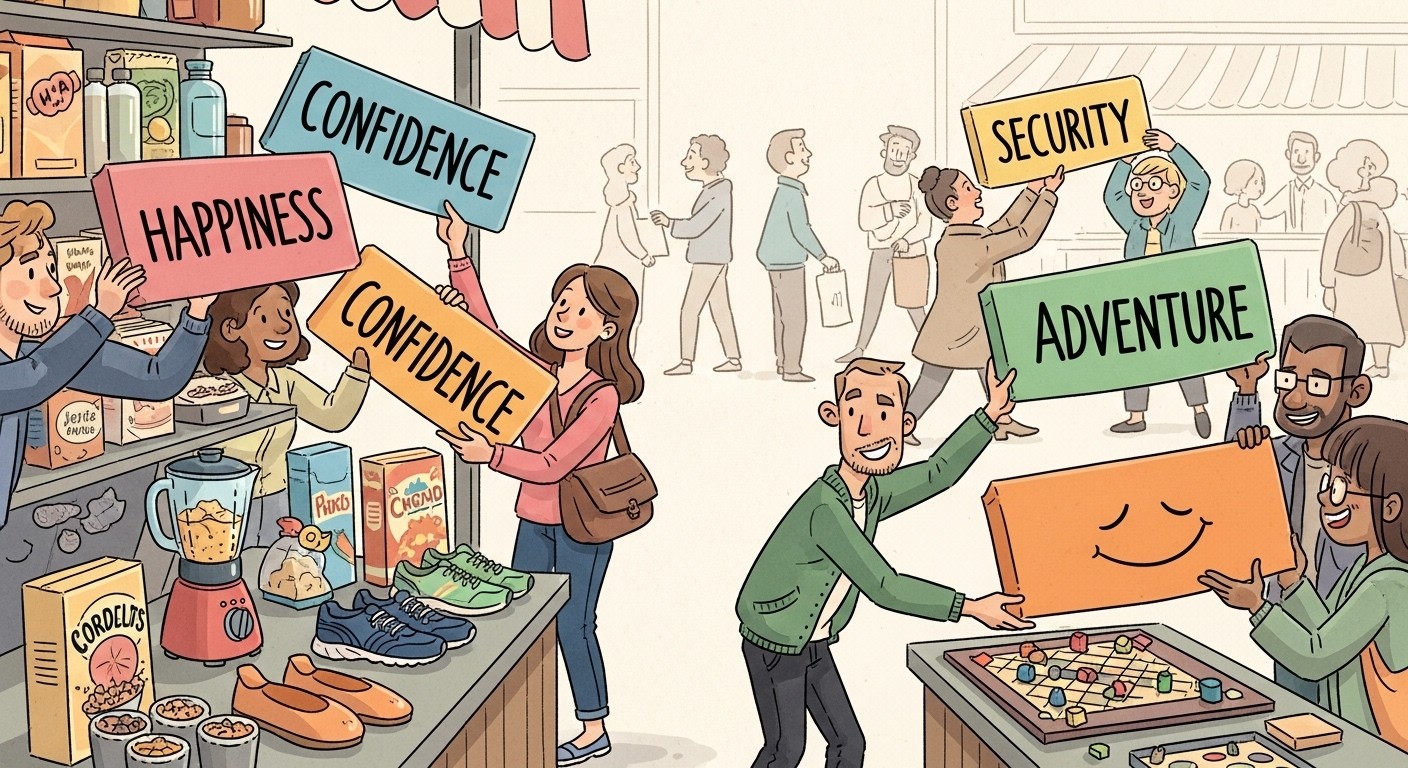
But then everyone started doing it. Purpose became a performance. "Authentic" became a brand tone of voice. And the more brands told beautifully crafted stories about their values, the more consumers started looking past the story and asking a simple, human question: is any of this actually true?
A human truthWe are wired to detect inauthenticity. Before language, our survival depended on reading whether someone's words matched their actions. That instinct never left. When a brand's story doesn't match their behaviour, we feel it even if we can't always articulate why.
The 2024 Edelman Trust Barometer found that trust in brands has continued to decline, with fewer than half of consumers saying they trust most of the brands they buy from. That's not a creative problem. That's not a story problem. That's a proof problem.
People aren't less emotional than they used to be. They aren't less responsive to great narrative. What's changed is their threshold. They want to be moved — but they also want to be shown. They want the feeling of a great story and the evidence that backs it up. And when those two things exist together? The result isn't just a sale. It's a genuine relationship.
81% of buyers say trust is a deciding factor before purchasing
3x higher conversion when social proof accompanies brand narrative
68% of consumers have felt misled by brand storytelling
This isn't abstract. Here's what it actually looks like when a brand tells a story versus when they back it up:
Same brand. Two different ways of showing up.
Story only"We believe every woman deserves to feel confident in her skin. Our products are made with love and care."
Story + proof"We believe every woman deserves to feel confident in her skin — which is why 94% of our customers say their self-confidence improved within 30 days. Here's Priya's story."
Story only"We started this brand because we were fed up with fast fashion destroying the planet."
Story + proof"We started this because fast fashion broke our hearts — so we publish our full supply chain, pay our makers 40% above industry average, and have diverted 12 tonnes of fabric from landfill since 2022."
Feel the difference? The second version doesn't dilute the emotion. It deepens it. Because now you don't just feel something — you believe it. And belief is what actually moves people from interest to action.
When most marketers hear "proof," they think charts. Data. Case studies written in 9-point font that nobody reads. But that's not what we mean here and it's not what your audience needs.
Proof is simply evidence that your story is real. And it can take many forms, all of them deeply human.
Dense data reports
Award badges on the website
Formal case studies nobody reads
Celebrity endorsements
Press coverage logos
A customer's unfiltered words
Before/after that shows real change
Behind-the-scenes of how it's made
The founder admitting what went wrong
A specific number that surprises people
Notice that the second column isn't cold. It's intimate. Proof doesn't mean clinical. It means honest. And honesty — radical, unpolished, specific honesty — is the most disarming thing a brand can offer in a world saturated with careful messaging.
Patagonia doesn't just say they care about the planet — they show their Worn Wear programme repairing old jackets, publish their environmental impact reports, and have actively told people not to buy their products if they don't need them. That's uncomfortable proof. And it's exactly why people trust them absolutely.
Innocent Smoothies built a brand on warmth and personality — but underneath that warmth is rigorous transparency about their ingredients, their sourcing, and their ownership (yes, including the Coca-Cola investment that many fans didn't love). They told the complicated truth. And their community stayed because of it, not in spite of it.
Oatly turned their nutritional transparency into an entire creative campaign — putting ingredient debates and even critical letters on their packaging. They made the proof part of the story. And the result was a brand that felt more like a person than a product.
The proof-first storytelling checklist
Every claim you make — ask: can I show this, not just say it? Then show it.
Replace vague adjectives ("high quality", "passionate", "sustainable") with specific facts and numbers.
Let your customers speak before you do. Real words from real people land harder than your best copywriter.
Show your process — the making, the mistakes, the iteration. Imperfection is not weakness; it's credibility.
Tell the difficult truths voluntarily, before someone else tells them about you.
Make your values behavioural, not decorative — policies, practices, and decisions that cost you something.
Here's what nobody tells you about proof: it doesn't make your brand less emotional. It makes it more so.
When someone reads a real customer's words and sees themselves in that experience — that's more moving than any brand film you could produce. When a founder admits the year things nearly fell apart and then shows you what they learned — that's more compelling than any polished origin myth.
The brands that make people feel something and believe something at the same time are the ones that create the deepest, most durable relationships. Not because they're louder. Not because their story is more dramatic. But because they made you feel like they weren't performing for you. They were just telling the truth.
And in a world exhausted by performance, truth is the rarest and most powerful thing a brand can offer.
"Don't just tell people who you are. Show them — again and again, in small specific honest ways — until belief becomes something they arrive at on their own."